

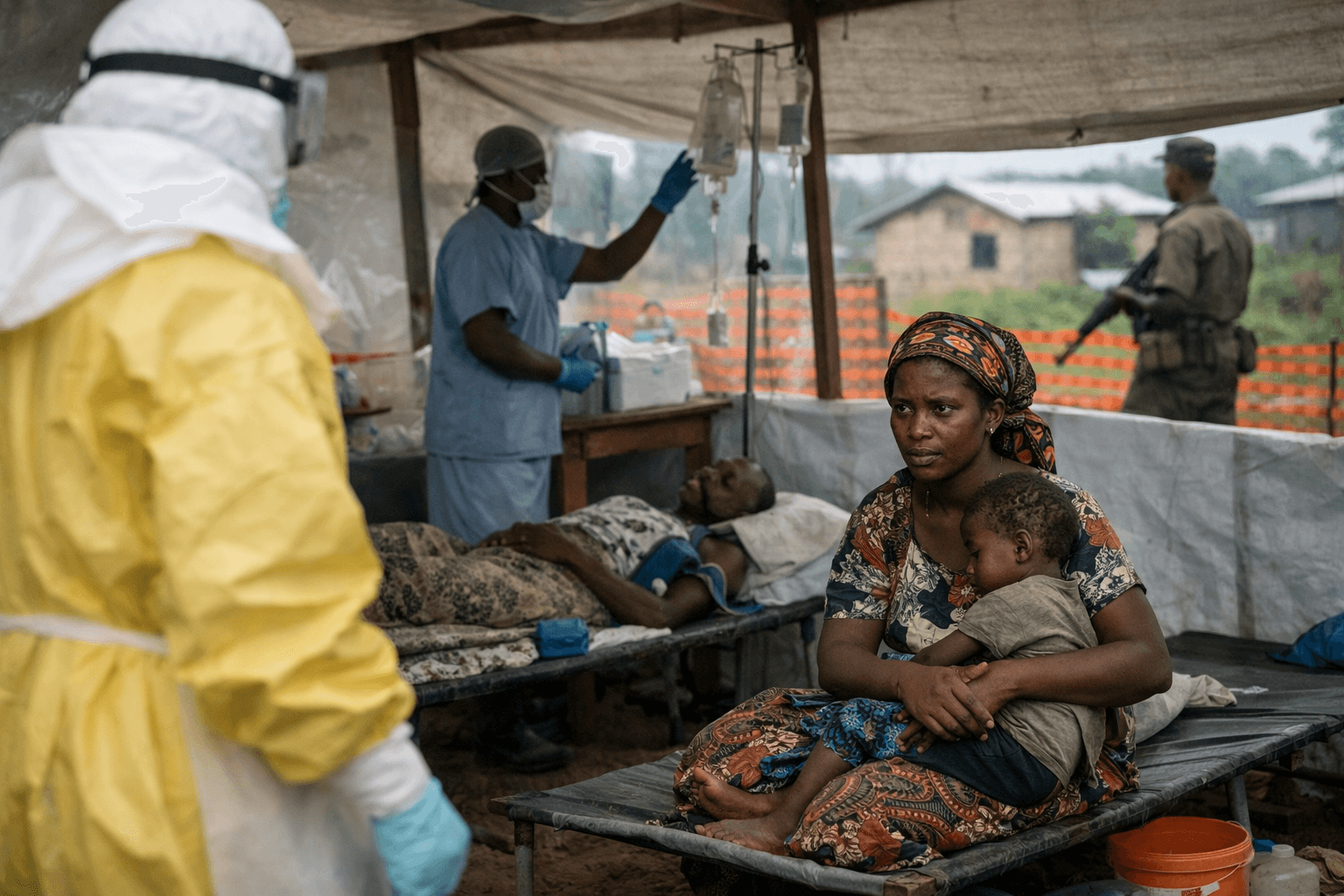
The Democratic Republic of Congo is grappling with a devastating Ebola outbreak that has claimed over 1,400 lives, with the fatality rate soaring to approximately 70%. The crisis is further complicated by the convergence of conflict, conspiracy theories, and a crumbling healthcare system, leaving thousands of lives hanging in the balance. As the World Health Organization warns, the outbreak is occurring in a region affected by armed violence, mass displacement, and acute hunger, making it a perfect storm that is hindering containment efforts and exacerbating the humanitarian crisis.
The Congo has experienced decades of conflict, corruption, and instability, which has led to a weakened healthcare system and a lack of trust in authorities. This has created a fertile ground for conspiracy theories and misinformation to spread, with many believing that Ebola is a hoax or a tool for Western powers to exploit the country's resources.
In the North Kivu and Ituri provinces, the outbreak is having a devastating impact on local communities, with over 500 people dying in the city of Beni alone. The conflict and displacement are leading to a rise in malnutrition, particularly among children, with over 1 million children in need of nutritional assistance. Health workers are facing immense challenges in containing the outbreak, with over 150 attacked or killed since the outbreak began. The lack of access to basic healthcare services, including vaccination and treatment, is further complicating the response efforts. For instance, in the town of Mangina, health workers are struggling to reach affected areas due to the presence of armed groups, while in the city of Goma, conspiracy theories are leading to widespread mistrust of health workers.
The international community can play a crucial role in supporting the response efforts and addressing the underlying humanitarian crisis in the region. This can be achieved by providing additional funding and resources to strengthen the healthcare system, as well as working with local communities to counter conspiracy theories and misinformation. Furthermore, the international community can help to address the root causes of the conflict and instability in the region, such as poverty, corruption, and lack of access to education and economic opportunities.
The long-term implications of the outbreak are dire, with the potential to undermine the country's fragile healthcare system and exacerbate the humanitarian crisis. If left unaddressed, the outbreak could lead to a significant increase in mortality rates, as well as a rise in poverty and instability in the region. Therefore, it is essential that the international community takes immediate action to support the response efforts and address the underlying humanitarian crisis in the region. The people of the Democratic Republic of Congo are in desperate need of assistance, and it is up to the international community to provide the necessary support to prevent a catastrophe of epic proportions.