

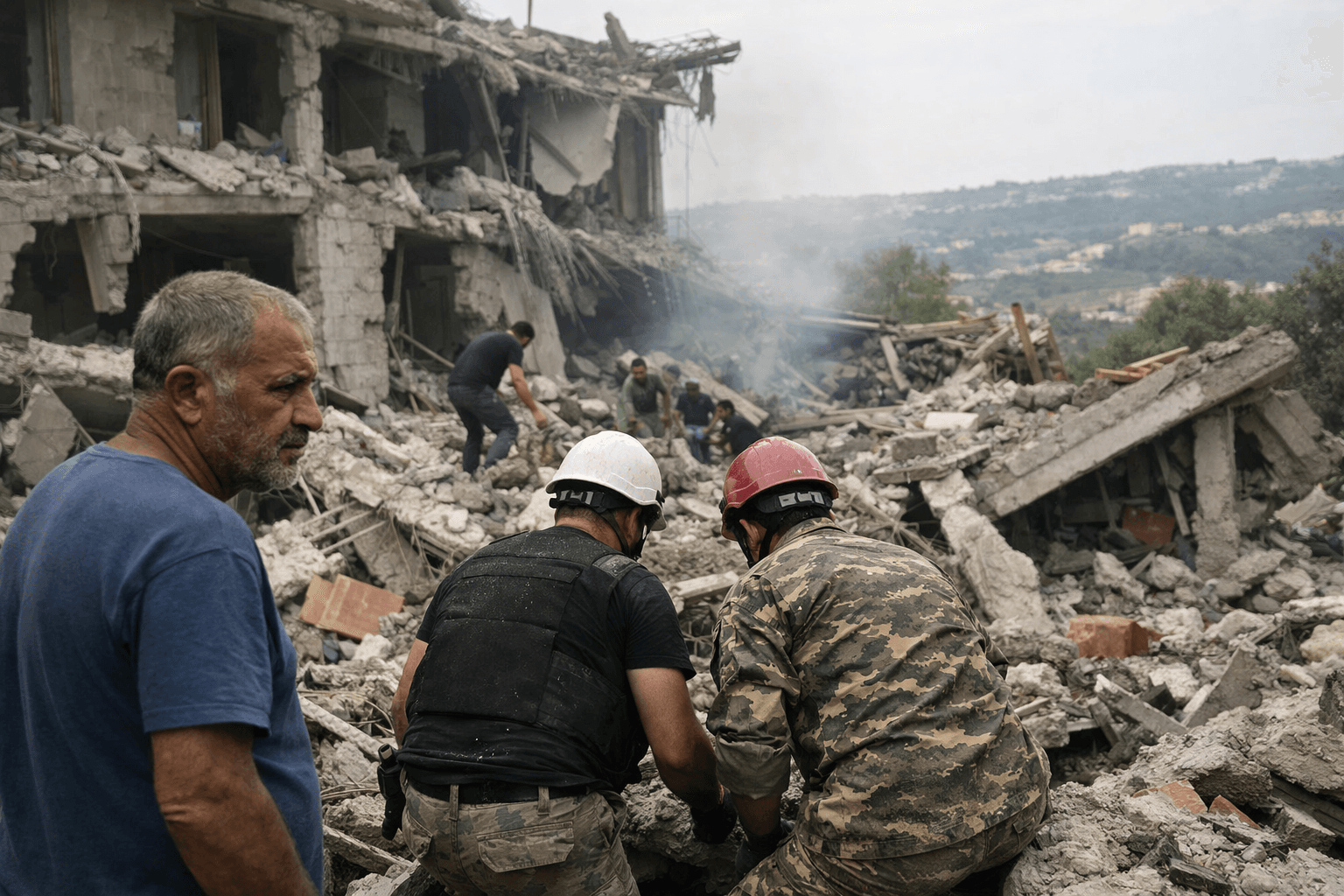
The recent surge in Israeli air strikes on Lebanon has left a trail of devastation, claiming the lives of at least 19 people and raising questions about the effectiveness of the extended ceasefire. The strikes have been particularly brutal, with a single attack on a house in southern Lebanon killing 10 people, including three children and three women. This senseless violence has sparked outrage and despair among the civilian population, who are struggling to come to terms with the loss of loved ones. As the death toll continues to mount, the people of Lebanon are facing a desperate and frightening reality. \n\n The conflict between Israel and Lebanon has a long and complex history, with periodic outbreaks of violence and fragile ceasefires. The recent extension of the ceasefire was intended to provide a temporary reprieve, but the continued air strikes have raised concerns about the commitment of both parties to the agreement. The presence of various militant groups in the region has further complicated the situation, with Israeli forces targeting these groups in their attacks. \n\n The human cost of the air strikes has been devastating, with civilians, particularly women and children, bearing the brunt of the violence. The strike on the house in southern Lebanon, which killed three children and three women, has left surviving family members to pick up the pieces and try to rebuild their lives. In Beirut, two childhood neighbors who lost five relatives in an Israeli strike are now fighting for justice, highlighting the personal and emotional toll of the conflict. The strikes have also caused widespread destruction and displacement, leaving many without access to basic necessities like food and shelter. \n\n As the situation continues to deteriorate, international organizations and governments are facing increasing pressure to intervene and prevent further escalation of the violence. The United Nations has called for an immediate ceasefire, while human rights groups have condemned the targeting of civilians. However, with the conflict showing no signs of abating, the people of Lebanon are left to wonder if a lasting peace is achievable. The international community must take a more proactive role in addressing the crisis, providing support to those affected and working towards a comprehensive solution that addresses the underlying causes of the conflict. \n\n The future of the ceasefire hangs in the balance, and the people of Lebanon can only hope that a way will be found to end the violence and bring about a lasting peace. Until then, they will continue to live in fear of the next air strike, the next explosion, and the next devastating loss of life.