

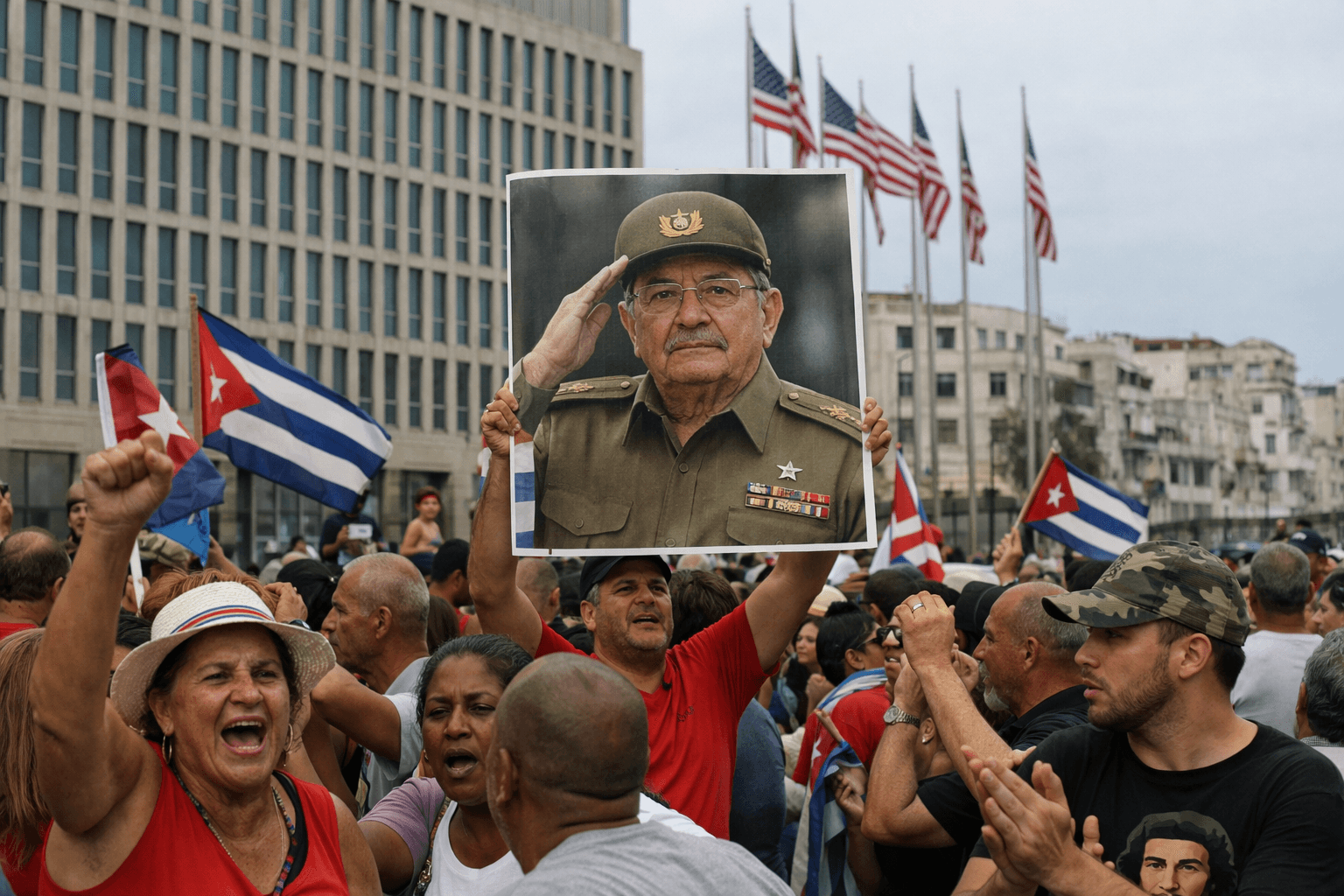
The streets of Havana have erupted in a frenzy of national pride and defiance as thousands of Cubans gather outside the US embassy to demonstrate their unwavering support for former President Raúl Castro. The catalyst for this outpouring of emotion is a US indictment that has sparked a diplomatic firestorm, charging Castro with murder in connection to the downing of two civilian planes 30 years ago. As the crowds wave flags and chant slogans, the complexities of international law and the tensions between national sovereignty and global accountability have come to the forefront. \n\n The complex and often contentious history between the US and Cuba serves as the backdrop for this latest development. The longstanding US embargo and Cuba's socialist government have created a deep-seated sense of national pride and resistance among the Cuban people. The downing of the civilian planes in 1996, which resulted in the deaths of four people, was a major incident in this history, and the US indictment has rekindled tensions between the two nations. \n\n The US indictment charges Castro with murder, alleging that he ordered the downing of the two civilian planes. The indictment also names Luis González-Pardo, a Cuban pilot currently residing in Florida, as a defendant. As the news of the indictment spread, thousands of Cubans took to the streets to express their outrage and solidarity with Castro. The Cuban government has closed ranks around the former president, with officials publicly defending his actions as necessary to protect national security. \n\n The diplomatic fallout from the indictment has raised fundamental questions about sovereignty, justice, and the complexities of global accountability. The international community is watching closely as the situation unfolds, with many wondering how the US plans to pursue Castro's extradition and what implications this may have for US-Cuba relations. The potential consequences for González-Pardo, who is currently residing in Florida, are also unclear. \n\n The days ahead will be crucial in determining the outcome of this diplomatic standoff, as the US and Cuba navigate the complex web of international law and national sovereignty. As the crowds continue to gather outside the US embassy, their chants and slogans a testament to the enduring power of national pride, the world waits with bated breath to see what's next in this unfolding drama. The situation highlights the deep-seated sense of sovereignty and resistance that underpins the Cuban response, and its outcome will have significant implications for the future of US-Cuba relations.