

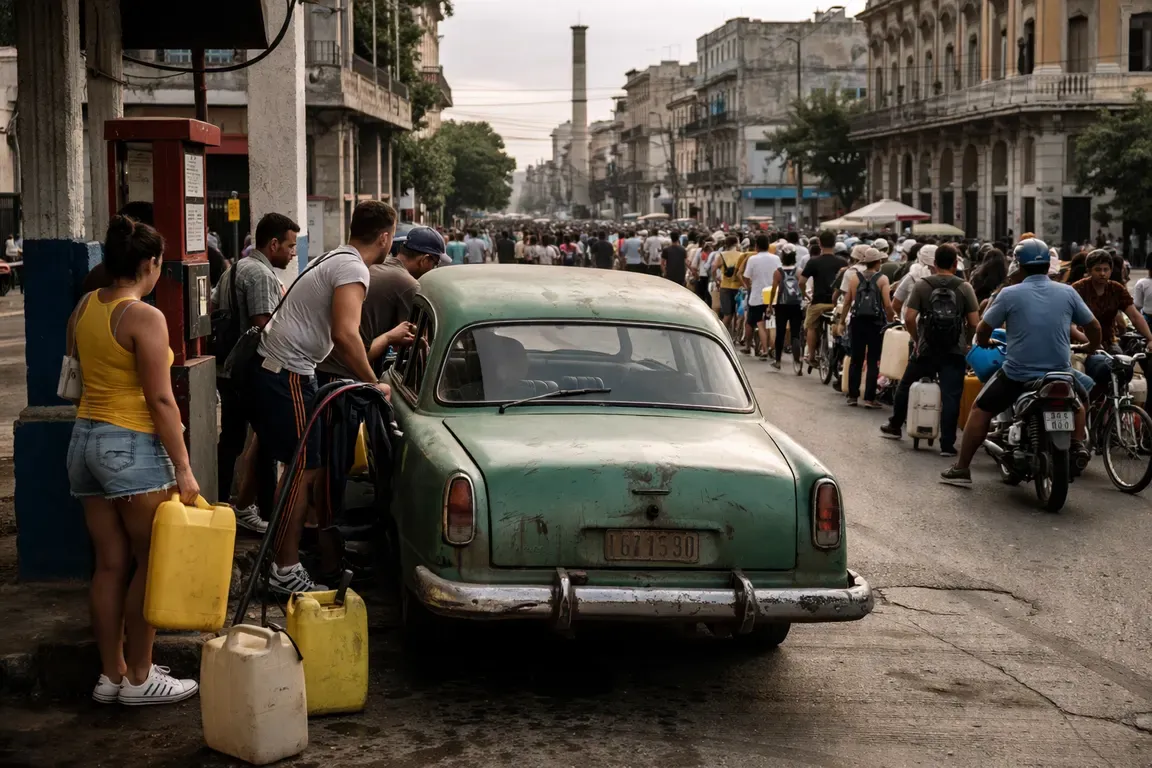
The Trump administration has sanctioned Cuba's national oil company, Union Cuba-Petroleo, and blocked a deal to supply 250,000 barrels of fuel to the island, worsening Cuba's energy crisis. The sanctions and blocked deal are expected to exacerbate power outages and fuel shortages, affecting the daily lives of Cubans.
The US government's actions have sparked fears of a deepening energy crisis in Cuba, which has struggled under a decades-old embargo and a lack of petroleum. The Cuban government has not immediately responded to the sanctions, announced by the US Department of State.
Power outages have intensified in Cuba since US President Donald Trump threatened tariffs on countries that sell or provide oil to Cuba. The US government has previously sanctioned Cuban President Miguel Díaz-Canel and other officials. The sanctions on Union Cuba-Petroleo are the latest in a series of measures taken by the Trump administration to increase pressure on the Cuban government.
The blocked fuel supply deal has raised concerns about the impact on Cuba's economy and people, who are already struggling with power outages and fuel shortages. Critics argue that the sanctions are an attempt to exert pressure on the Cuban government, while others see them as a necessary measure to address human rights concerns.
The implications of the sanctions on Cuba's energy crisis are still unclear, but it is likely that the situation will continue to deteriorate in the coming weeks and months. As the energy crisis deepens, the Cuban government will be forced to find alternative sources of fuel, which could lead to further economic hardship for the island's residents.
The US government's actions have also raised questions about the potential consequences of the sanctions on the Cuban economy and people, and how the Cuban government will respond to the latest measures. The situation is being closely watched, as the energy crisis in Cuba continues to worsen under the weight of US sanctions.