

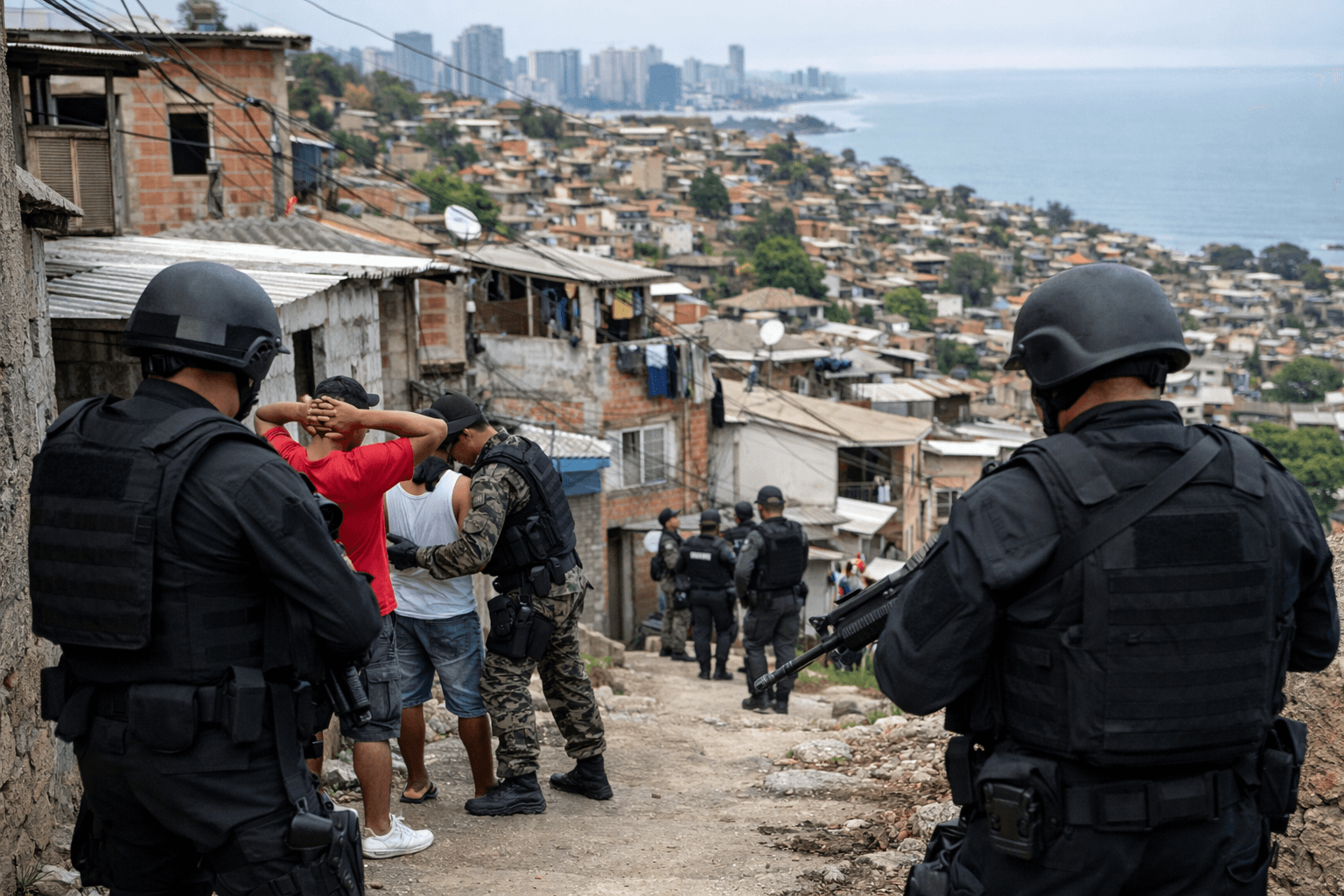
The US has designated two Brazilian drug gangs, the Red Command and First Capital Command, as terrorist organizations, a move that could have significant consequences for Brazil's upcoming elections and the country's fight against organized crime. The designation, made by the Trump administration despite opposition from Brazilian President Luiz Inacio Lula da Silva, marks a significant escalation in the US's efforts to combat organized crime in Latin America.
The Red Command and First Capital Command are considered two of the most violent criminal organizations in Brazil, with thousands of members and a history of brutal attacks. The US began designating criminal gangs as terrorists when the Trump administration took office, and the designation has two stages: initially, the groups are classified as 'Specially Designated Global Terrorists', and later as 'Foreign Terrorist Organizations'.
The designation could lead to broader action against the groups, including law enforcement, intelligence, and counterinsurgency efforts. Brazilian President Luiz Inacio Lula da Silva has made clear his opposition to the designation, while his rival has supported it. The move has been seen as a significant development in the US's efforts to combat organized crime in the region.
The US designation of the gangs as terrorist organizations has also led to increased tensions between the US and Brazil, as well as with other countries in the region. Some countries have opposed the designation, while others have supported it. The gangs' members and associates could face sanctions and other consequences as a result of the designation.
With Brazil's presidential election scheduled to take place in October, the issue of crime and security is likely to remain a major concern for voters. The US designation of the Brazilian gangs as terrorist organizations is likely to be a key issue in the election, with implications for regional security and politics.