

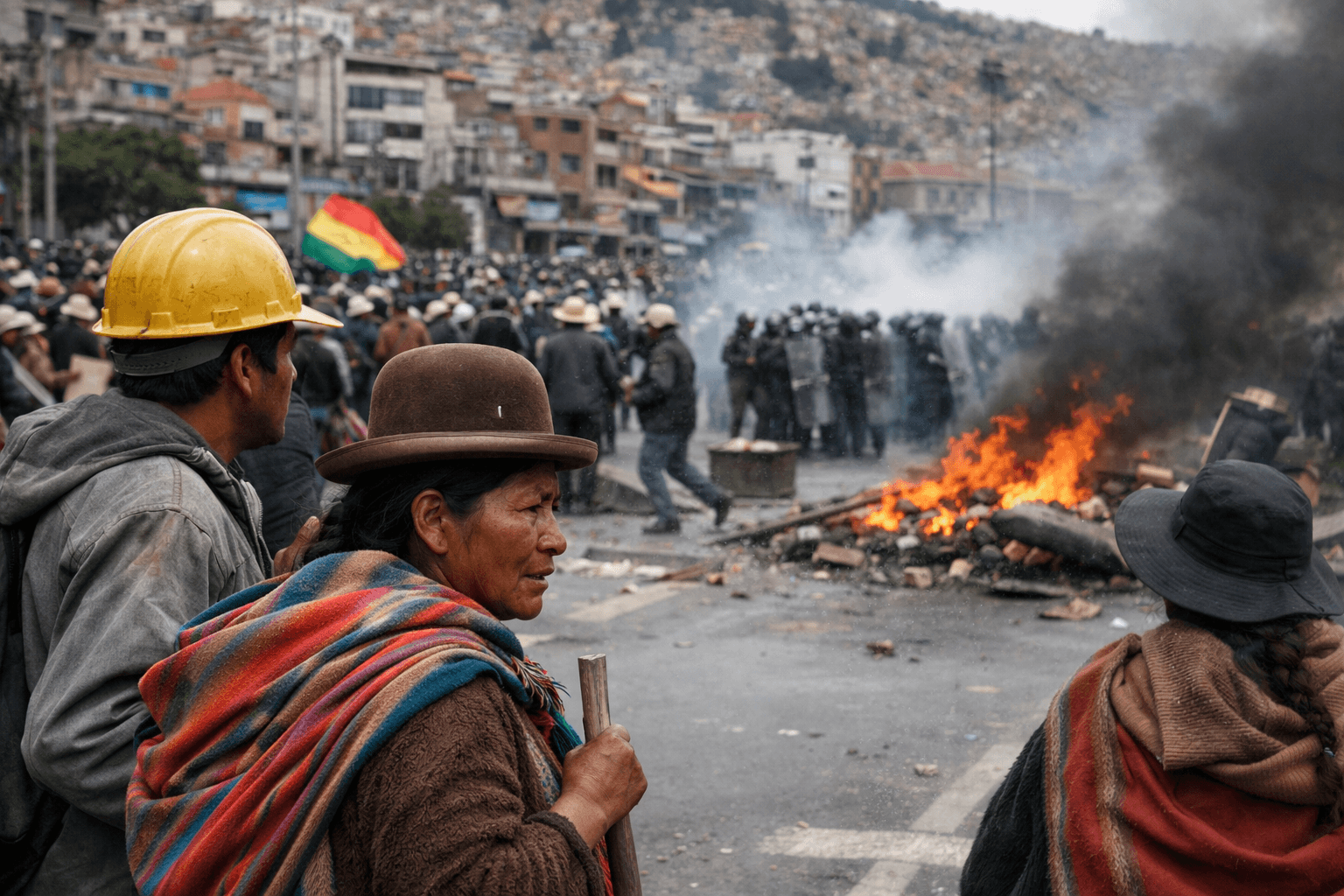
Bolivia's capital city of La Paz is engulfed in protests and violent clashes, as the country's working class and indigenous communities fight for their livelihoods and demand the resignation of President Rodrigo Paz. The protests, led by thousands of farmers, miners, teachers, and workers from other sectors, are a culmination of dissatisfaction with the new government's economic policies, which have exacerbated the economic crisis and affected the most vulnerable populations. With year-on-year inflation hitting 14 percent in April, the country is experiencing its worst economic ordeal in four decades. The government's decision to scrap two-decade-old fuel subsidies has drained the treasury's international dollar reserves and failed to stabilize fuel supplies, leaving many to wonder if the country is on the path to recovery.
Bolivia has a complex political history, with a shift from socialist rule under Evo Morales to a conservative government under President Rodrigo Paz. The country's economy has been heavily reliant on natural resources, and the working class and indigenous communities have been historically marginalized. This complex history has led to a deep-seated distrust of the government among these communities, who feel that their interests are not being represented. The current protests are a reflection of this distrust, with many calling for a return to the socialist policies of the past.
The protests have been marked by violent clashes, looting, and over 100 detentions, with images showing protesters looting an office and making off with furniture, computers, and other equipment. The public prosecutor has issued an arrest warrant for the leader of the country's largest union, COB, accusing him of terrorism and inciting crime. Despite the violence, the protests remain largely peaceful, with many calling for the government to listen to their demands. Farmers are struggling to sell their produce, miners are facing unemployment, and teachers are demanding better working conditions. The indigenous communities are also feeling the brunt of the economic policies, with their traditional ways of life being threatened by the privatization of state-owned companies.
The legacy of former socialist president Evo Morales continues to influence the political landscape in Bolivia, with many seeing him as a champion of the working class and indigenous communities. His supporters have been at the forefront of the protests, calling for a return to the socialist policies of the past. However, the government has accused Morales of inciting violence and destabilizing the country, leading to a deepening divide between his supporters and the government. As the protests continue, it remains to be seen how the government will respond and what the consequences will be for the country's future stability and prosperity.
The future of Bolivia hangs in the balance, as the country teeters on the brink of chaos. With the protests showing no signs of abating, the government must find a way to address the underlying causes of the unrest and find a solution that works for all Bolivians. If not, the country risks descending into further chaos, with potentially disastrous consequences for the working class and indigenous communities who are already bearing the brunt of the economic crisis.