

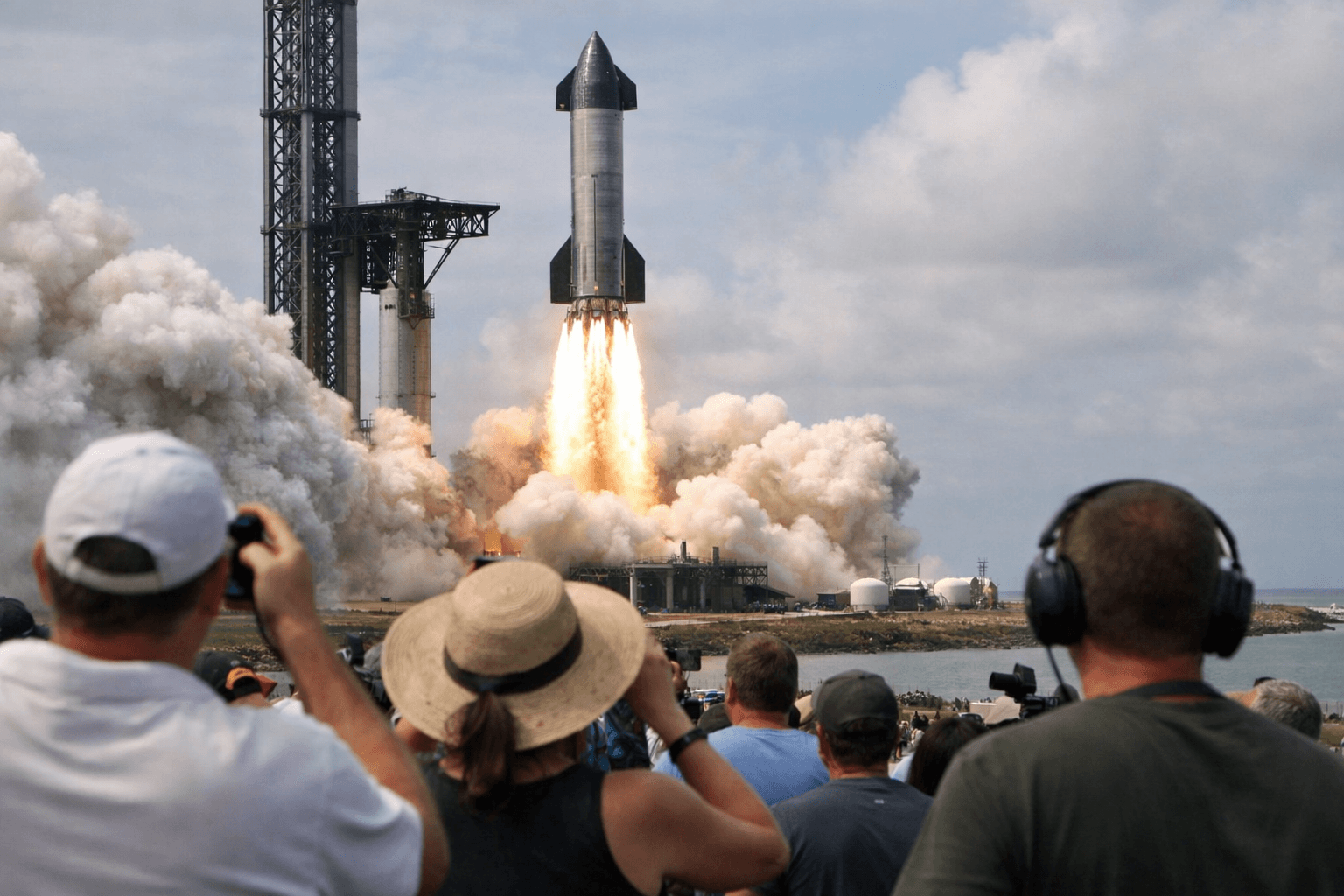
As the world watches with bated breath, Elon Musk's SpaceX is poised to retry the launch of its massive Starship rocket, a mission that could make or break the company's ambitious plans to return humans to the Moon and revolutionize space travel. The high-stakes test marks a crucial milestone in the development of a reusable lunar lander, a key component of NASA's Artemis program. With the US space agency aiming to return humans to the Moon by 2028, the success of this launch is more critical than ever. SpaceX has been working tirelessly to overcome the challenges that led to the postponement of the previous launch, and the company is now ready to put its redesigned rocket to the test.
The Artemis program has sparked a new space race between the US and China, with the latter targeting 2030 for its first crewed mission. NASA is under pressure to meet its own deadlines, and SpaceX, as a key player in the program, must demonstrate the viability of its Starship rocket. The company has made significant progress in developing the rocket, which stands at 407 feet when fully stacked, making it the largest rocket ever built by SpaceX. The launch will be the 12th Starship flight overall, but the first in seven months, and will demonstrate the company's redesigns in flight.
The mission's primary goal is to test the Super Heavy booster, which will splash into the water off the coast, and deploy a payload of 20 mock satellites and two specially modified Starlink satellites. The test mission is meant to last approximately 65 minutes after liftoff, as the upper stage cruises on a suborbital trajectory and eventually splashes down in the Indian Ocean. SpaceX is under contract with NASA to produce a modified version of Starship to serve as a lunar landing system, and the success of this launch will be a major step towards achieving that goal. The company has also filed with US financial regulators to go public, likely in June, in what is expected to become a record initial public offering.
The success of the Starship launch will have a significant impact on the employees of SpaceX, who have been working tirelessly to develop the rocket. The local community in Brownsville, Texas, where the launch site is located, will also be affected, with the potential for job creation and economic growth. The broader space industry is watching the development of reusable rockets with great interest, and the success of the launch could lead to a new era of space exploration. However, the potential risks and consequences of a failed launch are also significant, and SpaceX will need to mitigate them to ensure the safety of people and the environment. With the eyes of the world on the launch, SpaceX is ready to take the next step in its ambitious plans to return humans to the Moon.
The outcome of the launch will have far-reaching implications for NASA's Artemis program and the US space agency's plans to return humans to the Moon. A successful launch will be a major boost to the program, while a failure could lead to significant delays and setbacks. As the world waits with bated breath for the launch, one thing is certain - the success of the Starship rocket is critical to the future of space exploration.