

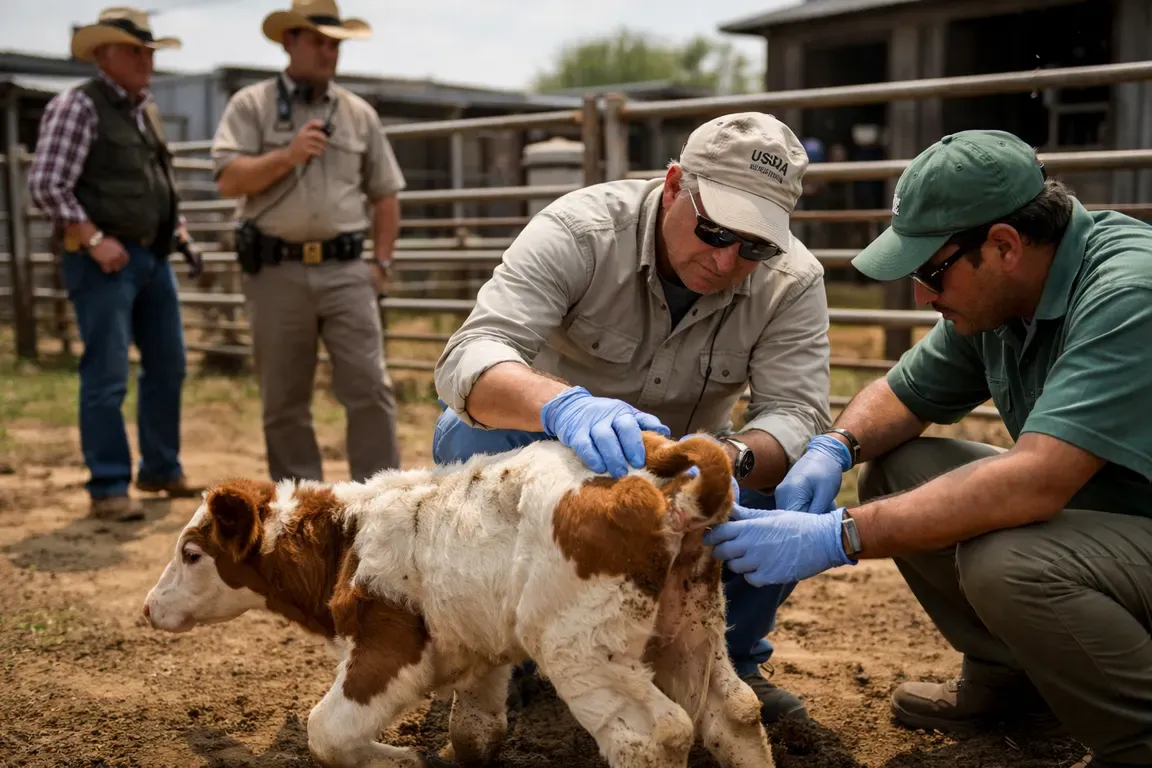
A calf in Texas has been infected with the New World screwworm, a flesh-eating parasite that hasn't been seen in the US for 60 years. The US Department of Agriculture confirmed the parasite's presence in the calf, found near the US-Mexico border. This detection raises concerns about the potential impact on the US cattle industry and food prices, which are already high.
The US cattle industry is a significant contributor to the nation's food supply, and an outbreak could affect cattle farmers and the broader food industry, potentially leading to higher food prices and economic losses. The parasite was detected in a calf in Texas, marking the first case in the US in 60 years.
The US Department of Agriculture is involved in the detection and response to the outbreak, but details on the response plan and potential economic impact are not yet available. The parasite's return to the US has raised questions about how it reappeared after 60 years and what measures are being taken to prevent its spread. As the US Department of Agriculture works to contain the outbreak, cattle farmers and industry experts are bracing for potential economic losses and disruptions to the food supply.
The detection of the New World screwworm in Texas serves as a reminder of the ongoing risks to the US cattle industry and the need for continued vigilance and response efforts. With food prices already high, the potential impact of the outbreak on the nation's food supply is a pressing concern, and the US Department of Agriculture's response will be closely watched in the coming weeks. The agency's efforts to contain the outbreak and prevent the parasite's spread will be crucial in mitigating the potential economic losses and protecting the US cattle industry.
The US Department of Agriculture has a history of successfully eradicating the New World screwworm from the US, having done so in the 1960s through a campaign that involved releasing sterile male screwworms to mate with wild females, thereby reducing the parasite's population. It is unclear at this time whether a similar approach will be taken to address the current outbreak. As the situation develops, the US Department of Agriculture is expected to provide more information on its response plan and the potential impact on the US cattle industry.