

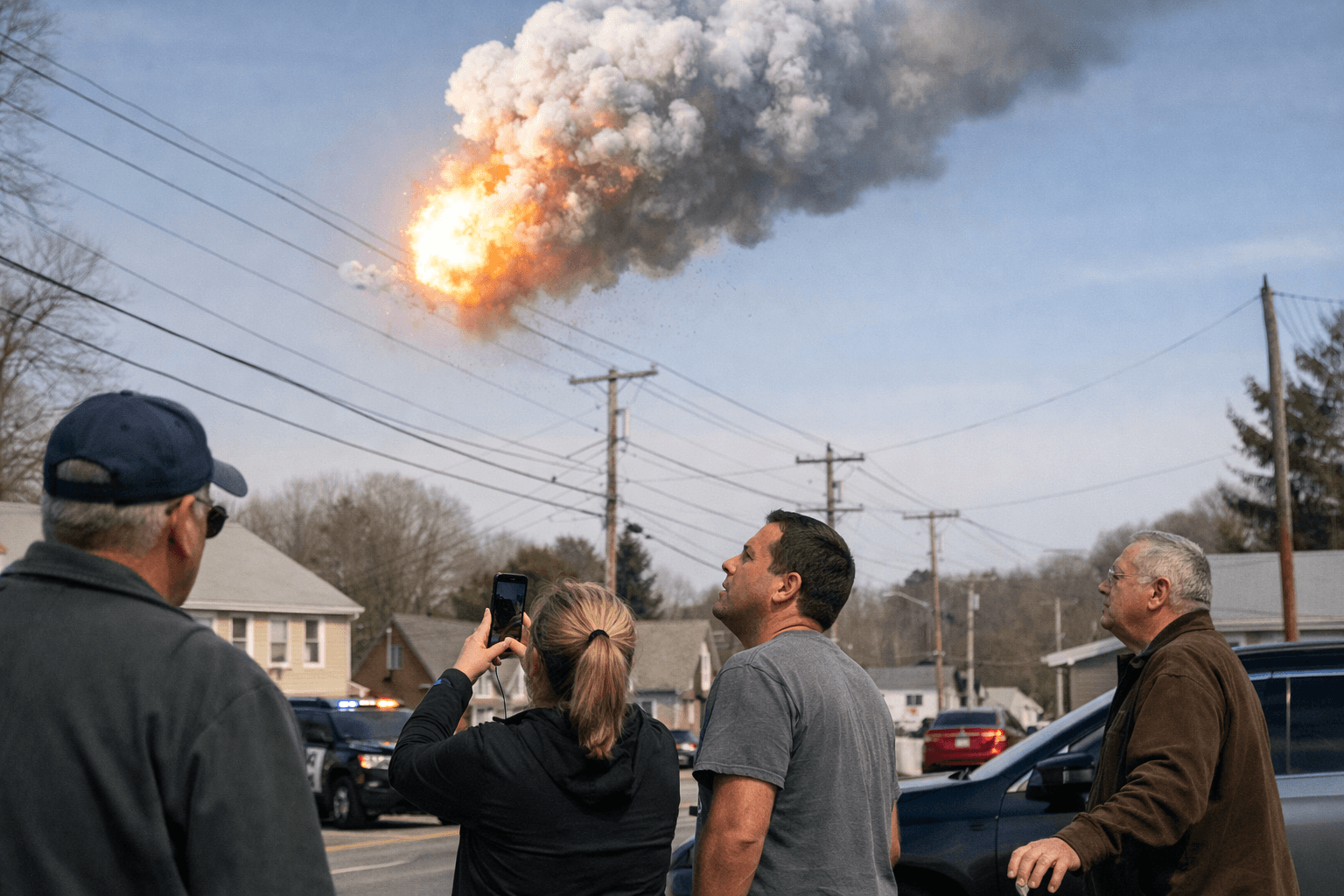
A meteor exploded over northeastern Massachusetts and southeastern New Hampshire at 2:06 p.m. on Saturday, causing loud booms and ground shaking. The blast, equivalent to 300 tons of TNT, has alarmed residents and highlights the potential risks of meteor explosions on populated areas.
The explosion is a reminder of the potential dangers of meteor explosions, which can release massive amounts of energy and cause significant damage. According to NASA, the meteor was traveling at more than 120,000 kilometers per hour when it broke apart, releasing a large amount of energy.
Area residents were alarmed by the unexpected loud booms, with social media users reporting that houses were shaking. However, there are no reports of injuries or significant damage from this incident. The meteor was not associated with any currently active meteor shower, and it was a natural object, not a re-entry of space debris or a satellite.
This incident comes after a similar event in 2013 over Chelyabinsk, Russia, where a fireball streaked above the city, releasing a blast equivalent to 440,000 tons of TNT. The 2013 explosion in Russia injured more than 1,600 people and blew out windows over 518 square kilometers. In comparison, the recent explosion over Massachusetts and New Hampshire was significantly smaller, but it still serves as a reminder of the potential risks of meteor explosions.
As scientists continue to study the meteor and its explosion, residents are left to wonder what can be done to predict and prepare for such events in the future. The incident has raised questions about the effectiveness of current meteor detection systems and the need for more research into the prevention and mitigation of meteor explosions.
The National Aeronautics and Space Administration (NASA) has confirmed the incident and is working to provide more information about the meteor and its explosion. As the investigation continues, one thing is clear: the explosion over Massachusetts and New Hampshire is a reminder of the potential dangers of meteor explosions and the need for continued research and vigilance.