

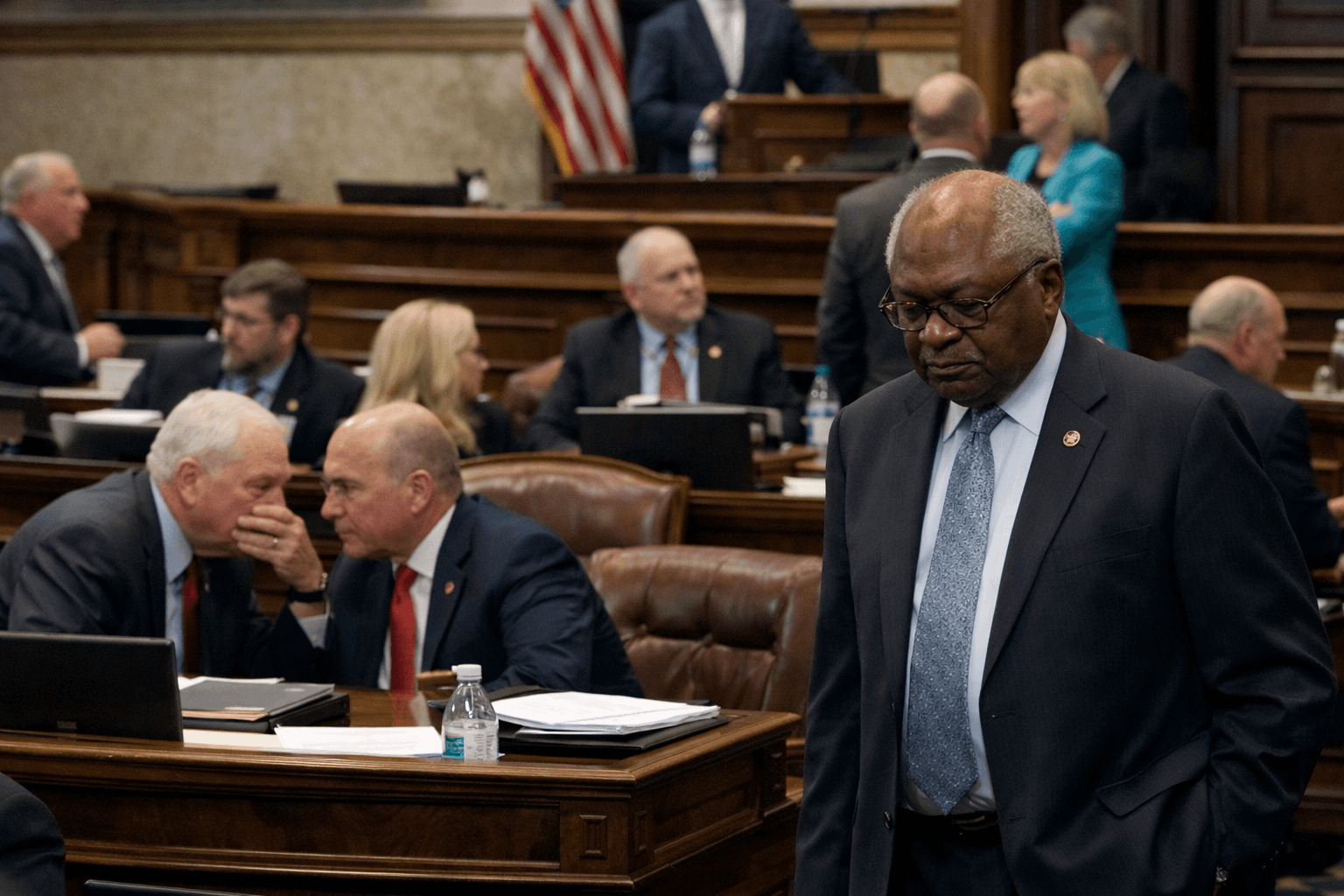
In a surprising turn of events, Republican lawmakers in South Carolina have defied former President Donald Trump's urging to redraw the state's congressional map, effectively ending the effort to flip a key House seat held by Democrat Jim Clyburn. The South Carolina Senate voted 25-18 against advancing the new map, which had aimed to split Clyburn's district into two Republican-leaning districts. This setback marks a significant blow to Trump's attempts to reshape the electoral landscape in the South, where the GOP has been seeking to gain an upper hand in the House of Representatives. \n\n The redistricting process in the United States is a complex and crucial aspect of the country's electoral system, determining the boundaries of congressional districts and influencing the balance of power in the House of Representatives. Every 10 years, following the release of new census data, states typically redraw their district maps to reflect changes in population and demographics. However, in some cases, lawmakers may attempt to redraw maps mid-decade, often in response to changing political circumstances or court rulings. \n\n The proposed map in South Carolina, led by Republican state Representative Jay Jordan, would have given the GOP a better chance of winning the state's 6th Congressional District, currently held by Clyburn. Trump had personally urged Republican state senators to support the redistricting effort, despite none of them facing election this year. However, the plan ultimately failed to gain traction, with some Republican lawmakers expressing concerns about the map's impact on minority voting rights. The failure of the redistricting effort in South Carolina comes on the heels of a similar setback in Alabama, where judges struck down newly drawn US House districts, citing concerns over the maps' impact on minority voting rights. \n\n The failed redistricting effort in South Carolina will have a direct impact on the state's voters, particularly in the 6th Congressional District, which will continue to be represented by Clyburn. The district's residents will retain their current representation, and the state's minority communities may have been spared from potential disenfranchisement. The implications of this failure extend beyond South Carolina, as it may embolden Democrats in other Southern states to resist similar redistricting efforts. With the 2024 elections looming, the balance of power in the House of Representatives remains a crucial prize, and the outcome of redistricting efforts in the South will play a significant role in shaping the national electoral landscape. \n\n The rejection of the redistricting plan in South Carolina serves as a reminder that the complexities of redistricting efforts can often lead to unexpected outcomes, even when backed by high-profile figures like Trump. As the 2024 elections approach, the consequences of this failure will be closely watched, and the impact on the balance of power in the House of Representatives will be a major factor in determining the trajectory of national politics.