

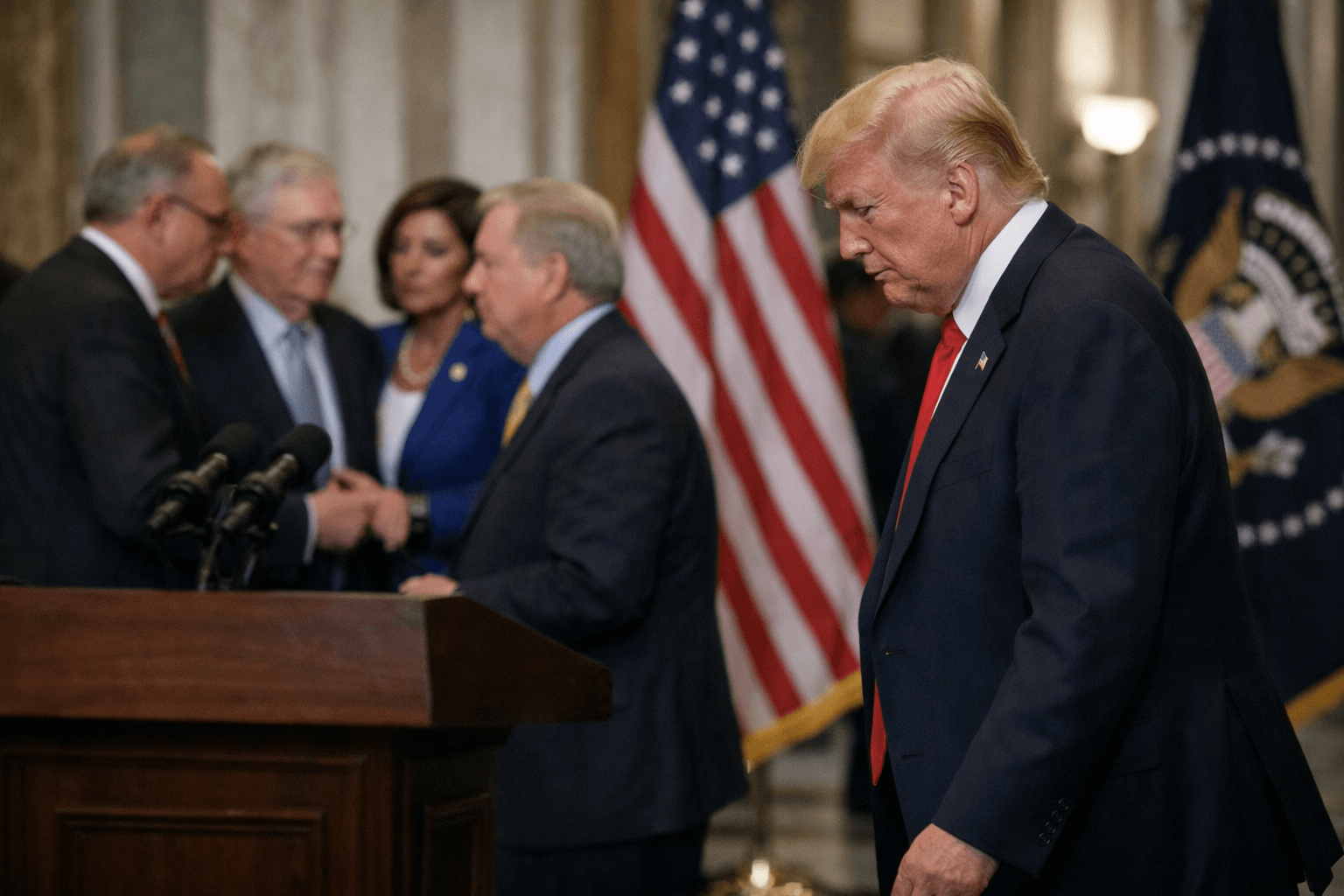
The Trump Administration has dropped its 'anti-weaponization' fund, a $1.776 billion initiative aimed at compensating victims of government 'weaponization', following rare bipartisan backlash from lawmakers. This decision marks a rare instance of congressional unity against a Trump Administration policy, potentially setting a precedent for future pushback.
The Justice Department initially announced the fund, which was met with strong opposition from both Democrats and Republicans. According to NBC News, the fund's creation was intended to provide compensation for victims of government 'weaponization'. Senate Minority Leader Chuck Schumer planned to use Senate procedure to try to kill the fund, as reported by NBC News.
A court order paused the fund, which the Justice Department said it would abide by despite 'strongly disagreeing' with the ruling, according to NPR. President Trump met with congressional Republicans to discuss concerns about the fund, which ultimately led to the decision to drop it. The exact details of the court order and the meeting between Trump and congressional Republicans are not publicly available.
The implications of this decision will be closely watched, as it may set a precedent for future congressional pushback against the Trump Administration's policies. The decision to drop the fund affects potential recipients of the compensation money and raises questions about the administration's willingness to work with Congress. As the administration moves forward, it remains to be seen how this decision will impact the relationship between the Trump Administration and Congress.
The decision to scrap the fund highlights the significance of bipartisan opposition in shaping the administration's policies. By dropping the fund, the Trump Administration has shown that it is willing to reconsider its policies in the face of strong congressional opposition. This development may influence the dynamics between the executive and legislative branches, potentially leading to more instances of congressional pushback against the administration's policies.