

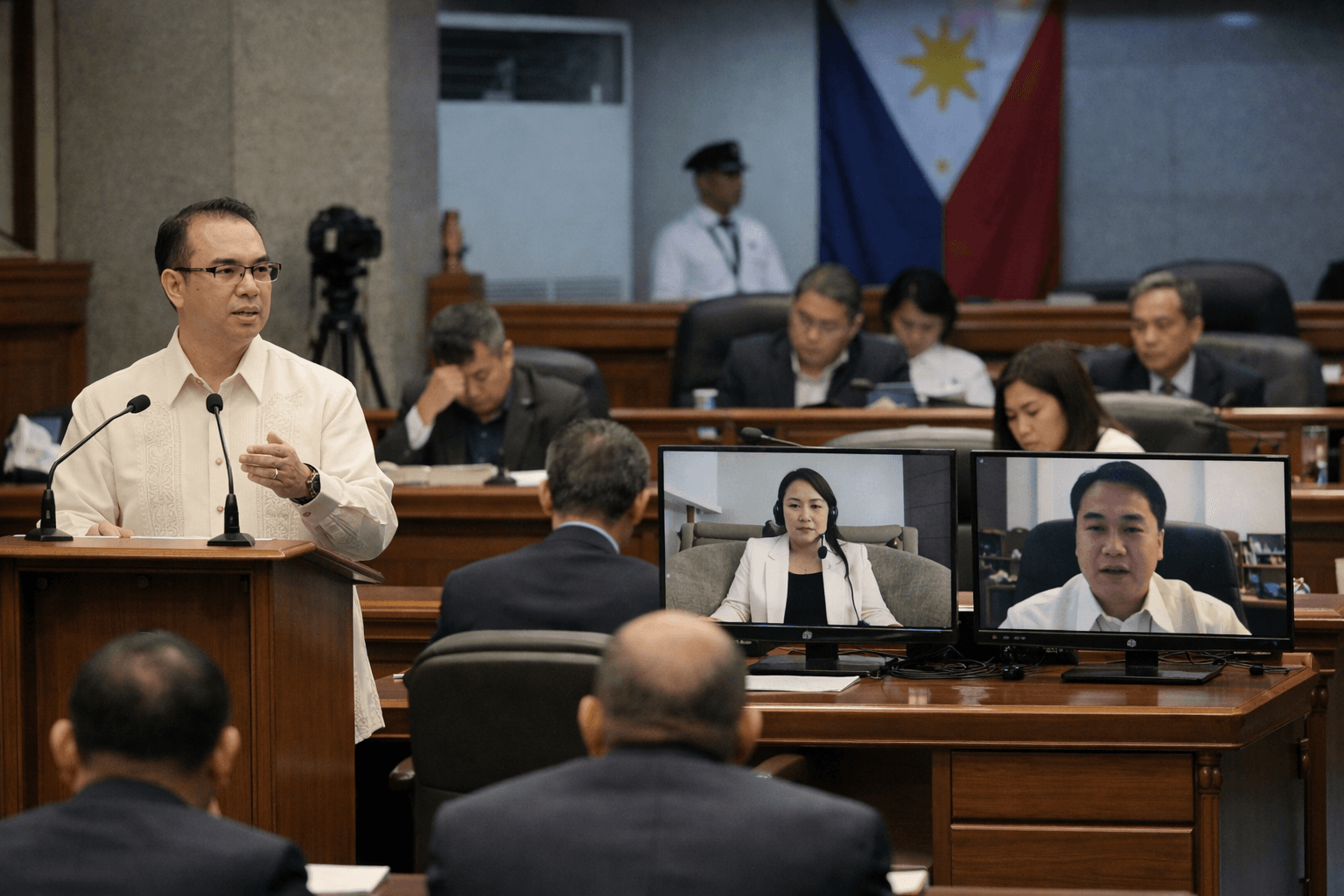
The Philippine Senate is considering a proposal to allow remote participation, prompting concerns about the institution's functioning and democratic processes. Senate President Alan Peter Cayetano has denied claims that the proposal is meant to benefit President Duterte or senators facing arrest, saying it aims to improve the Senate's overall functioning.
The proposal has been met with opposition from minority senators, who argue that they have the rules on their side and that the move is unconstitutional. The Senate has been embroiled in controversy, including a recent gunfire incident and an ICC issue surrounding Senator Ronald 'Bato' dela Rosa, raising questions about its judgment and institutional steadiness.
According to Cayetano, the proposal could increase participation and representation among senators, particularly those who may be unable to attend sessions in person. However, minority senators have argued that the proposal could undermine the institution's credibility and stability, particularly if it is seen as a way to avoid accountability or scrutiny.
The Philippines is also experiencing diplomatic tensions with China, which has warned of potential job losses due to deteriorating bilateral relations, further highlighting the need for stable democratic institutions. The Department of Foreign Affairs has taken exception to China's tone, accusing Beijing's diplomats of implying that economic cooperation could be used as leverage.
As the Senate considers the proposal, it must balance the potential benefits of remote participation with the need to maintain its credibility and stability. The Senate's response to recent controversies has raised concerns about its ability to represent its citizens and uphold democratic processes. The proposal's implications extend beyond the Senate, potentially affecting the government's ability to function effectively and represent its citizens.
The Senate is expected to continue debating the proposal in the coming weeks, with a decision likely to have significant implications for the institution and the country's democratic processes. The outcome will be closely watched, as it may set a precedent for the use of remote participation in the Senate and potentially impact the country's democratic institutions.