

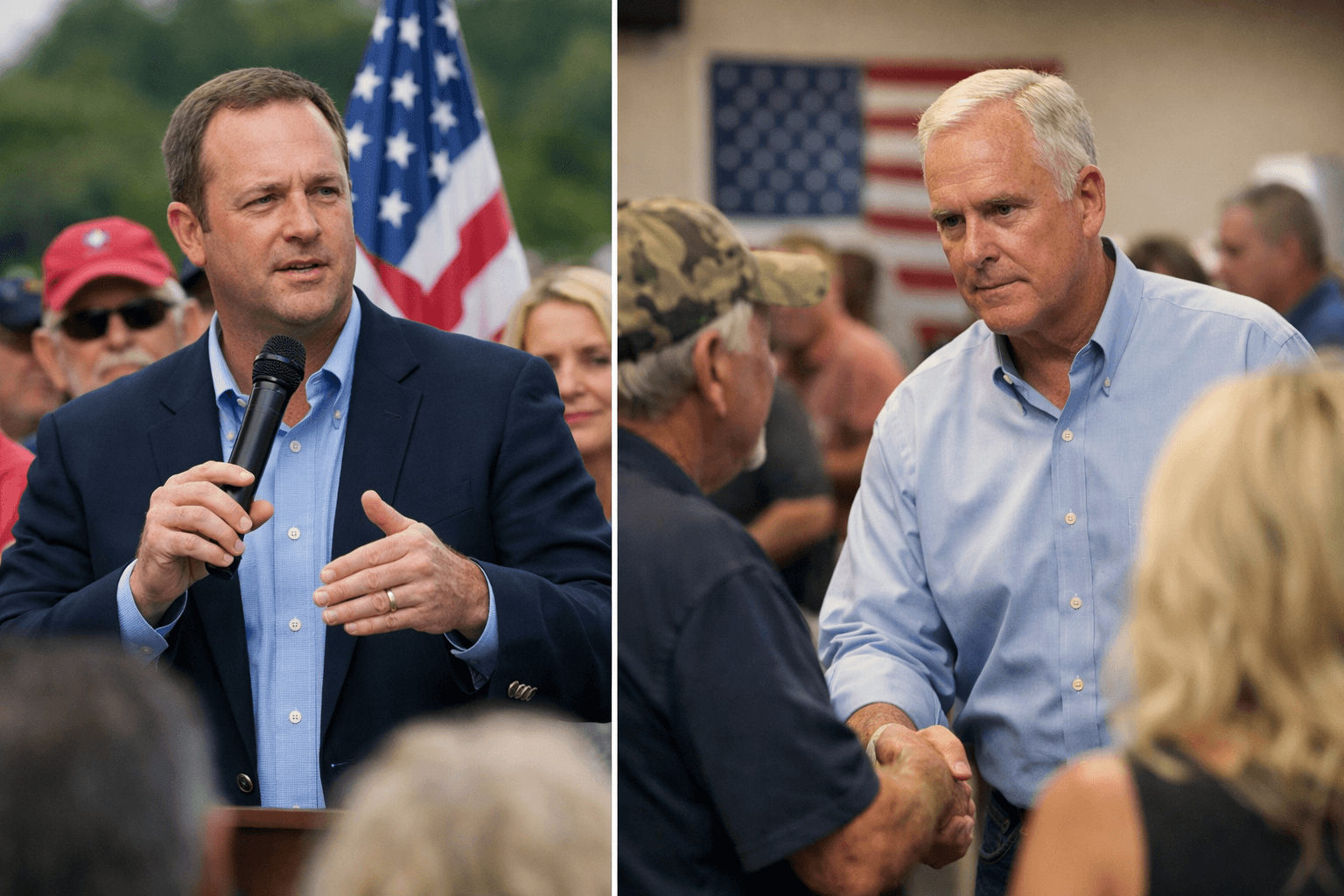
As the Republican primary run-off approaches, Georgia is bracing for a clash of ideologies between Burt Jones and Rick Jackson, two candidates with distinct visions for the state's future. The outcome of this election will have far-reaching consequences, not only for the state's governance but also for the national Republican Party. With the MAGA movement's influence looming large, the run-off is poised to ignite a fiery debate about the direction of the party. The candidates' contrasting styles and ideologies will undoubtedly shape the campaign, making for a thrilling and unpredictable ride.
The Republican primary in Georgia is taking place against the backdrop of a rapidly changing state, with a growing population and shifting demographics. This has made Georgia an increasingly competitive battleground in national elections, with both parties vying for control. The state's residents will be closely watching the run-off, as the eventual winner will play a crucial role in shaping policies on education, healthcare, and economic development.
The run-off campaign is expected to be marked by intense debate and rivalry between Jones and Jackson, with each candidate seeking to outdo the other in their appeal to conservative voters. Jones, the current lieutenant governor, has built a reputation as a traditional conservative, while Jackson, a billionaire, has been endorsed by former President Donald Trump, embodying the MAGA movement's influence on the party. As the campaign heats up, the candidates will be forced to navigate the complex landscape of Georgia's Republican base, where traditional conservative values often collide with the more radical ideology of the MAGA movement.
The outcome of the run-off will have significant implications for the lives of Georgia's residents, particularly in terms of policy decisions on key issues like education and healthcare. A governor aligned with the MAGA movement might prioritize conservative social policies, which could impact access to reproductive healthcare for women in the state. Conversely, a more traditional conservative governor might focus on fiscal policies, affecting the state's budget allocations for education and infrastructure. The results of the run-off will also have far-reaching implications for the national Republican Party, as it seeks to navigate the complexities of the MAGA movement's influence and its impact on the party's chances in the general election.
The run-off elections, scheduled for June 16, will determine the Republican nominees for the governor's race and the Senate seat, setting the stage for a highly contested general election. As Georgia gears up for this pivotal moment in its political history, one thing is clear: the outcome of the Republican primary run-off will have a lasting impact on the state's governance and the national Republican Party's strategy heading into the next general election.