

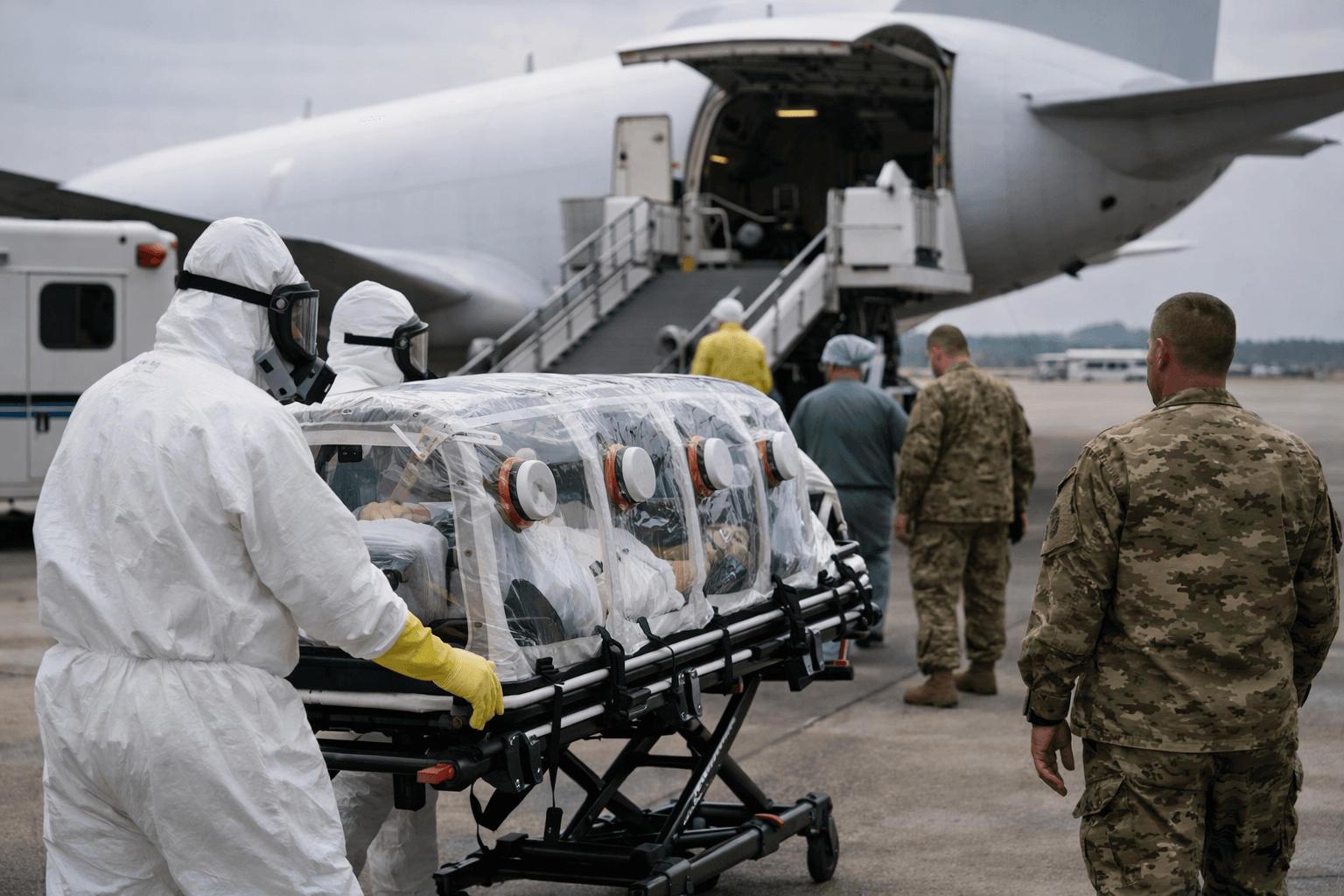
The US government's decision to send American Ebola patients to Europe for treatment has raised concerns about the country's preparedness to handle the disease and protect its citizens. As the Ebola outbreak continues to spread, the US is taking a cautious approach, opting to keep infected patients out of the country. This move has sparked concerns about the nation's ability to provide adequate care for its citizens and the potential consequences for families who may be separated by travel restrictions. The current Ebola outbreak is a global health crisis that has prompted a range of responses from governments and international organizations. With cases reported in several West African countries, the US has increased airport screenings at major cities, including New York's JFK, Los Angeles International, and Chicago's O'Hare, in an effort to prevent the spread of the disease. The White House has vowed to keep Ebola out of the US, with senior administration officials emphasizing the importance of preventing the spread of the disease. The decision to send American Ebola patients to Europe for treatment is based on the availability of specialized care and equipment, as well as the need to prevent the spread of the disease within the US. However, this approach will undoubtedly have a significant impact on patients and their families, who may face significant challenges in traveling to Europe to be with their loved ones. For example, a family from New York may have to navigate complex travel arrangements and visa requirements to visit a relative being treated in a European hospital. The US has also imposed travel restrictions on arrivals from affected countries, including a ban on direct flights from these countries, which will further complicate the process. A new facility is being set up in Kenya to treat American citizens who contract Ebola, providing closer proximity to affected areas and potentially reducing the need for lengthy travel arrangements.
As the situation continues to unfold, concerns about the preparedness of American healthcare workers and emergency responders are growing. The US government must ensure that these individuals are adequately trained and equipped to handle Ebola cases, should they arise in the US. The new facility in Kenya will play a critical role in this response, providing a safe and effective treatment option for American citizens who contract the disease. The US government's approach to Ebola treatment and prevention will also need to be coordinated with international efforts, requiring close collaboration with global health organizations and affected countries. The effectiveness of this approach will depend on the ability of governments and healthcare systems to work together to prevent the spread of the disease and provide adequate care for those affected.
The implications of the US government's decision to send American Ebola patients to Europe for treatment are far-reaching, with potential consequences for patients, families, and the broader healthcare system. As the outbreak continues to spread, it is essential that the US government prioritizes the safety and well-being of its citizens, while also working to prevent the spread of the disease and support international efforts to combat the outbreak. The coming weeks and months will be crucial in determining the effectiveness of the US response to the Ebola outbreak, and the nation's ability to protect its citizens and contribute to global efforts to combat the disease.