

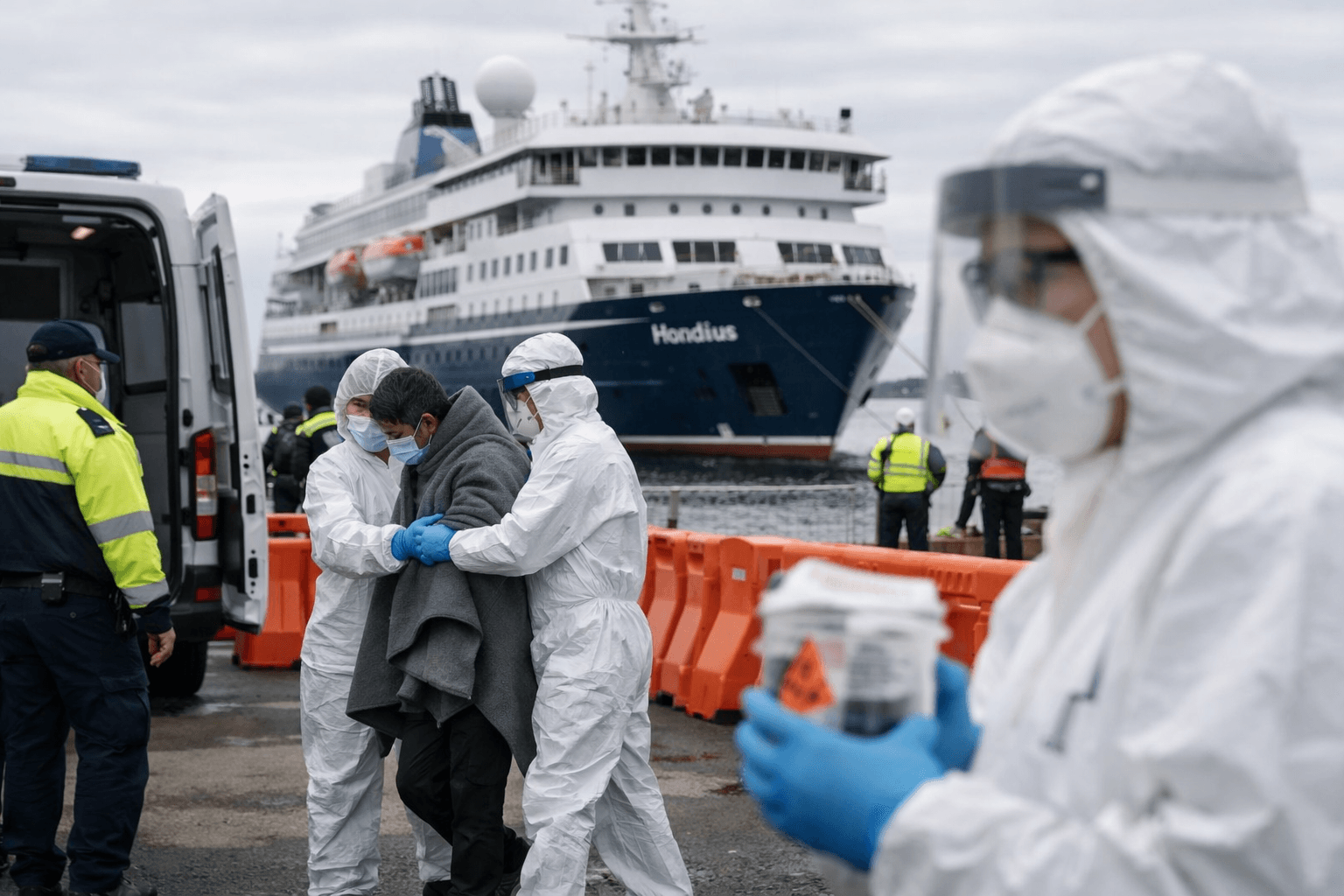
A recent surge in hantavirus cases linked to the MV Hondius cruise ship has raised alarms about the potential for human-to-human transmission, with the World Health Organization confirming a 12th case in the Netherlands. The outbreak, which has already claimed three lives, has prompted a massive monitoring effort across 30 countries, where over 600 contacts are being tracked. As the situation unfolds, concerns are growing about the challenges of containing a rare and highly infectious disease in a globalized world. \n\n The hantavirus, a rare virus spread by rodents, has no vaccines or specific treatments available, making it a significant concern for public health officials. The Andes species of the virus, detected in the latest case, is the only known strain that can be transmitted from person to person, adding to the complexity of the outbreak. \n\n As the MV Hondius cruise ship remains docked in Rotterdam harbor, undergoing disinfection, the crew and passengers are facing weeks of quarantine and monitoring for symptoms. The most recent case, confirmed in a crew member who disembarked in Tenerife, Spain, and was repatriated to the Netherlands, highlights the potential for global spread. With a small number of high-risk contacts still being located, the WHO has urged all countries to monitor passengers and crew carefully for the remainder of the quarantine period. \n\n The implications of the Andes species of hantavirus being capable of human-to-human transmission are far-reaching, requiring a concerted effort from health officials worldwide to prevent further spread. Support and resources are being provided to the crew members and passengers affected, including those who are hospitalized as a precaution. The families and friends of those affected are also being supported, with many facing weeks of uncertainty and concern about the potential for further spread. \n\n The ongoing monitoring effort and quarantine protocols will be crucial in determining the success of containment, and the WHO will likely play a key role in coordinating the global response to the outbreak. As the world watches with bated breath, the hope is that swift action and international cooperation will prevent further spread and save lives. The global community must come together to contain this outbreak and prevent the spread of this rare and highly infectious disease, with a strong and coordinated response being the key to a successful outcome.