

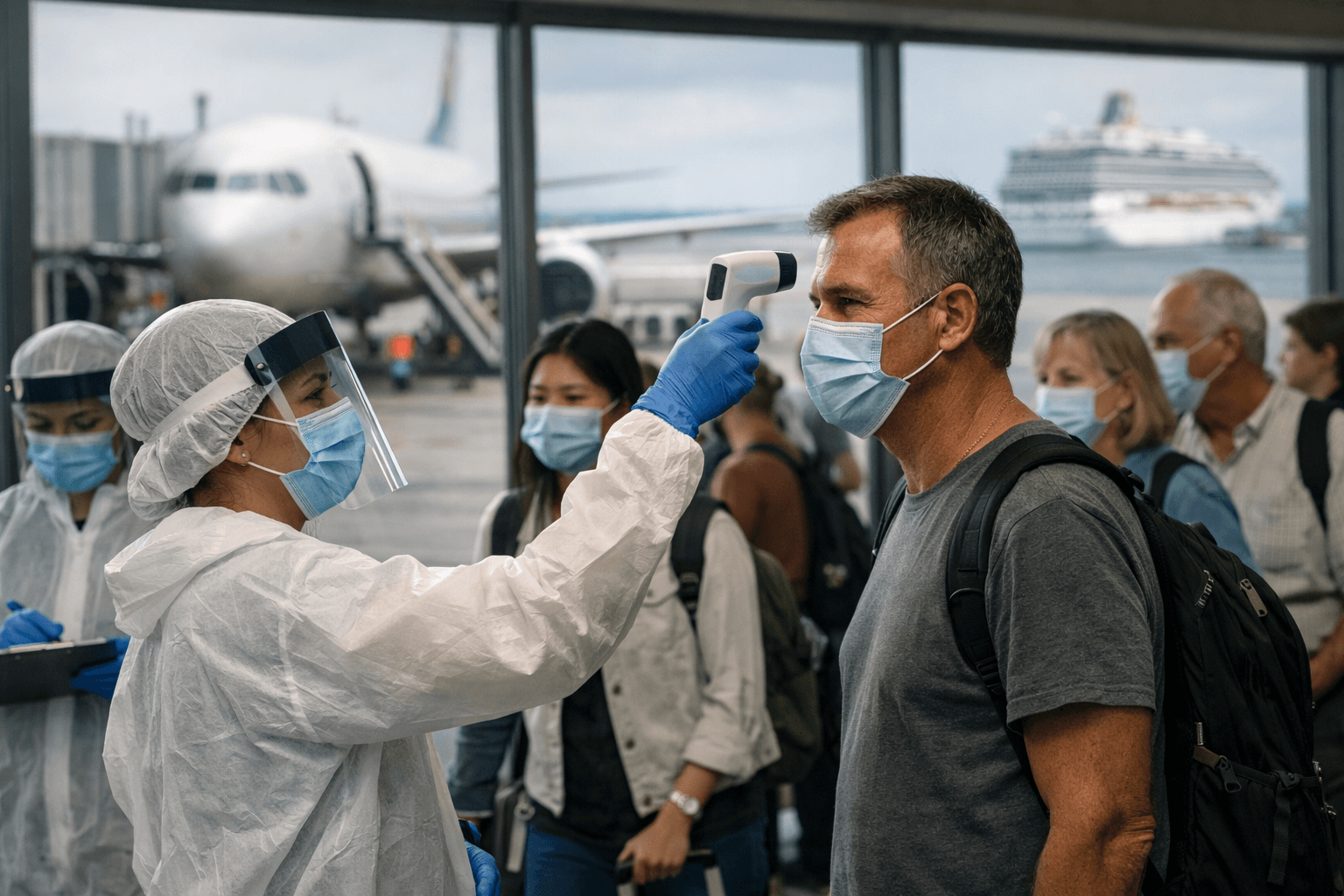
The recent hantavirus outbreak has sparked a complex investigation, involving multiple countries and health organizations, as the disease spreads across borders through international travel, cruise ships, and air travel. At the center of the outbreak is the intersection of global connectivity and the vulnerability of public health systems. The story raises questions about the effectiveness of global health surveillance and response systems in detecting and containing outbreaks like hantavirus. As the outbreak continues to unfold, 41 people in the United States are being monitored for potential exposure, highlighting the need for robust global health systems. \n\n Hantavirus is a rare and potentially deadly disease that can be spread through contact with infected rodents or their droppings. The Andes strain, which is at the center of the current outbreak, is the only one known to spread between people. The outbreak has sparked an international response, with health authorities working to identify the source of the infection and prevent further spread. The global death toll from the outbreak remains at three, with the infected Dutch woman who was on a plane to Johannesburg being one of the victims. \n\n The University of Nebraska Medical Center is monitoring 15 asymptomatic patients, while one patient who initially tested mildly positive has since tested negative and is being monitored in a quarantine unit. The US Centers for Disease Control and Prevention has emphasized that the broader risk to public health from the outbreak is low, but is taking precautions to monitor those who may have been exposed. The CDC has recommended that everyone under monitoring stay at home and avoid being around people during the 42-day monitoring period. This has significant social and economic impacts on the individuals and their families, who are required to stay isolated for an extended period. \n\n As the world becomes increasingly interconnected, the risk of diseases like hantavirus spreading quickly across borders increases. The outbreak has raised concerns among travelers and the general public, highlighting the need for awareness and precautions when traveling to areas where hantavirus is present. International cooperation and communication are crucial in preventing the spread of diseases like hantavirus. Organizations like the CDC play a vital role in this effort, working with global health authorities to identify the source of the outbreak and contain its spread. \n\n The outbreak's impact extends beyond those who were directly exposed, affecting families and communities as well. The need for robust global health surveillance and response systems has never been more pressing, as the world grapples with the challenges of infectious diseases in an increasingly interconnected world. As health authorities continue to monitor the situation and work to prevent further spread, one thing is clear: the effectiveness of global health systems will be put to the test in the coming weeks and months.