

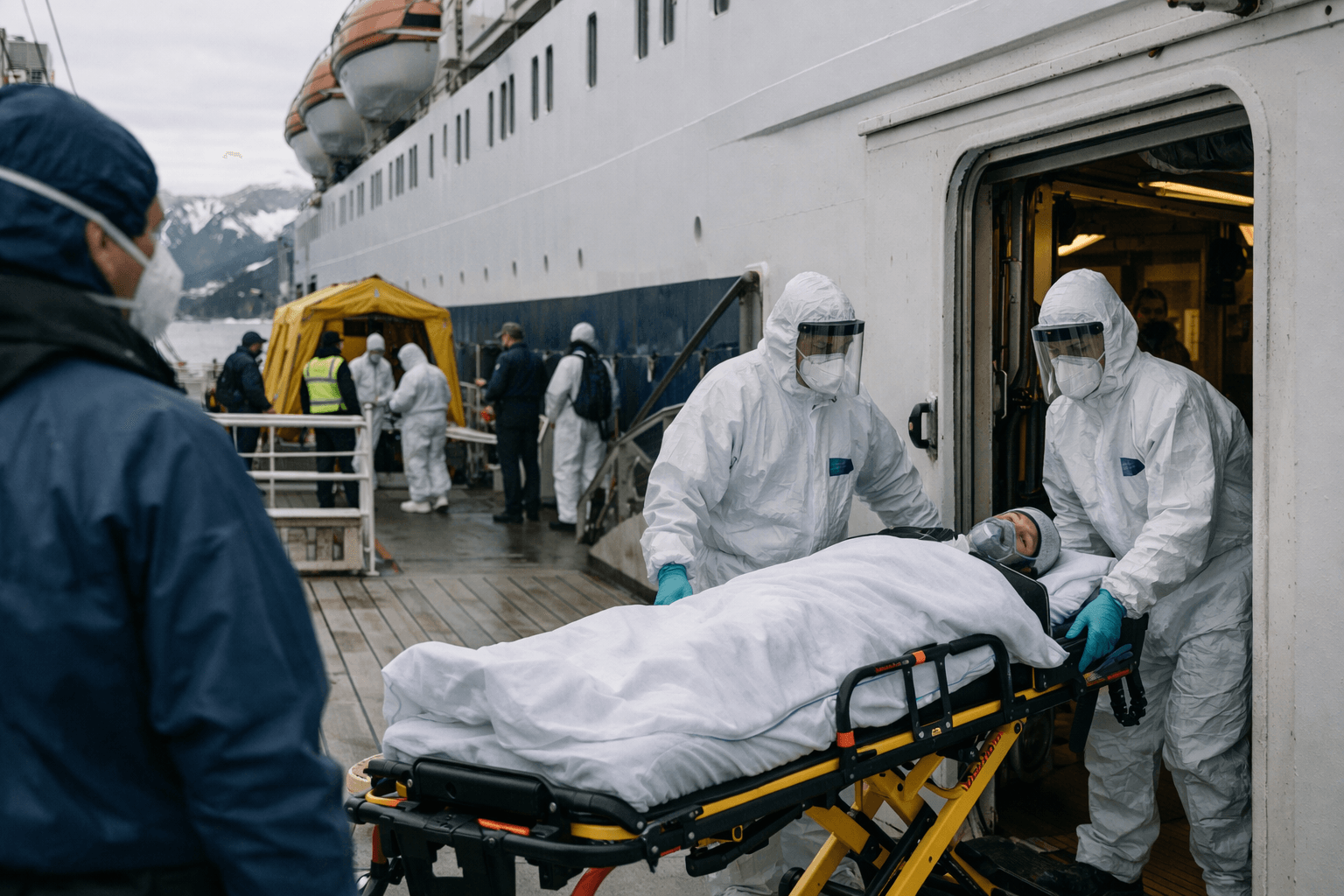
The MV Hondius cruise ship, once a luxurious getaway for over 120 passengers and crew, has become a hub for a complex international response to a rare and deadly disease outbreak. As the number of hantavirus cases continues to rise, with 11 reported and three fatalities, the global community is working together to contain the spread of the Andes virus, the only strain of hantavirus that can be transmitted between humans. The World Health Organization has assessed the public-health risk as moderate for those who were on the ship and low for the rest of the world, but concerns remain about the effectiveness of current protocols for preventing and responding to infectious disease outbreaks on cruise ships.
Hantavirus is a rare disease that typically spreads from the urine, feces, and saliva of infected rodents, making the outbreak on the MV Hondius unusual. The ship, which set sail from Argentina on April 1, has been evacuated, with passengers and crew flown out from the Canary Islands. The Andes virus, with no vaccines or specific treatments available, poses significant challenges for disease control and prevention, particularly in a confined environment like a cruise ship.
The outbreak has affected passengers and crew from multiple countries, including the United States, the United Kingdom, France, Spain, Switzerland, and the Netherlands. A 70-year-old Dutch man was the first to show symptoms, while a French woman is now critically ill and being treated with an artificial lung. The international response has been swift, with countries working together to provide support and resources to those affected. The WHO has been coordinating efforts, and health officials are working to identify the source of the outbreak and prevent further spread. However, questions remain about how the outbreak occurred and what measures can be taken to prevent similar outbreaks in the future.
As the world watches the hantavirus outbreak unfold, the cruise ship industry is facing scrutiny over its protocols for disease prevention and response. The MV Hondius outbreak has highlighted the challenges of managing a global health crisis, particularly in a confined environment with people from multiple countries. The incident has also raised concerns about the preparedness of cruise ships to respond to infectious disease outbreaks, and whether current protocols are sufficient to prevent the spread of disease. The outcome of this outbreak will likely have significant implications for the cruise ship industry, and may lead to changes in protocols for disease prevention and response.
The hantavirus outbreak on the MV Hondius serves as a reminder of the importance of global cooperation in responding to public health crises. As the situation continues to unfold, it is clear that the international community must work together to support those affected and prevent further spread of the disease. The incident will likely have lasting implications for the cruise ship industry and global health security, and it remains to be seen what changes will be made to prevent similar outbreaks in the future.