

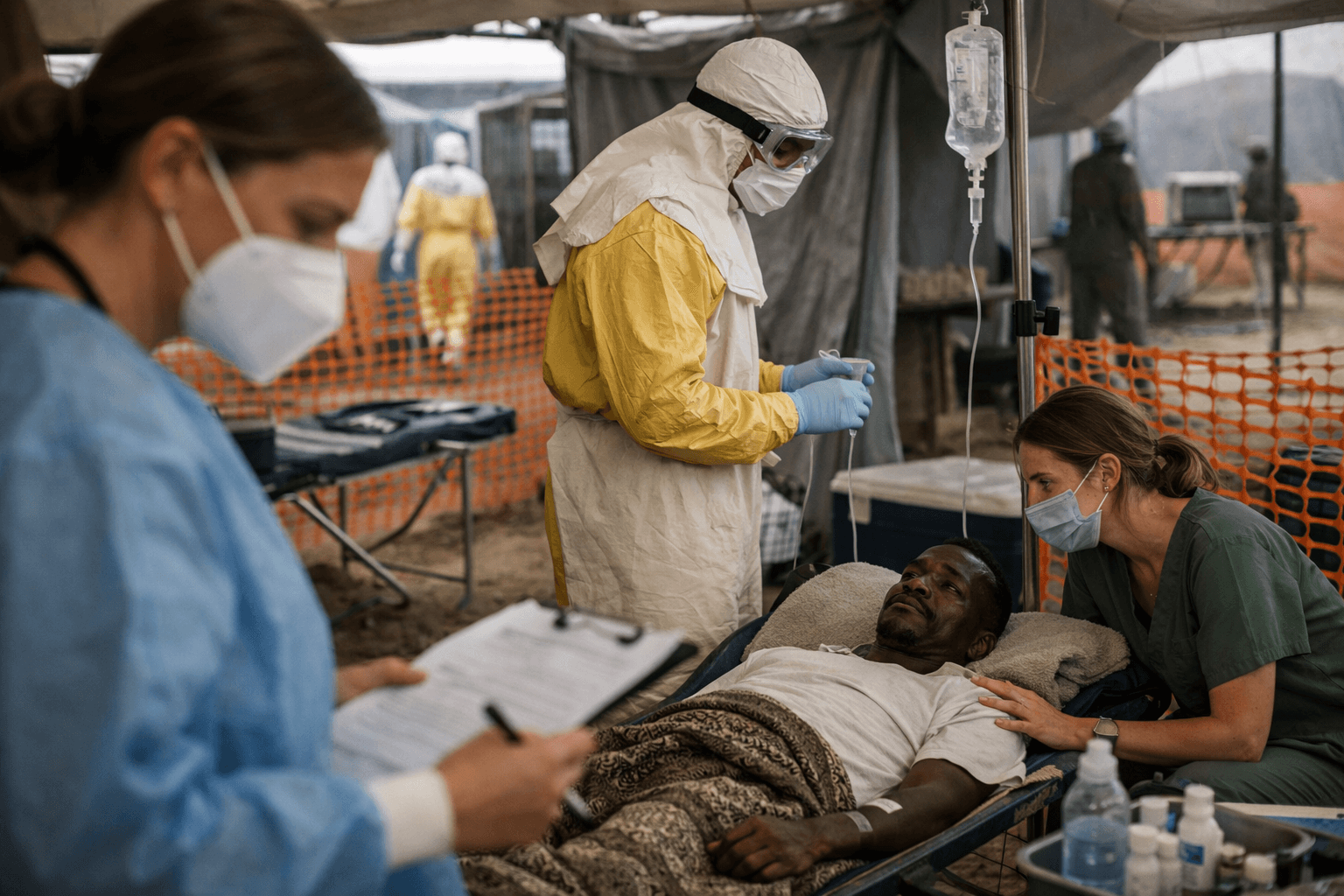
The World Health Organization's ability to respond to emerging health crises is under severe strain, as the latest Ebola and hantavirus outbreaks expose the devastating consequences of funding cuts and geopolitical tensions. With the WHO's budget slashed by 21%, the organization is struggling to cope with the demands of combating deadly diseases, prompting dire warnings from its chief of 'difficult, dangerous, and divisive times'. The current Ebola outbreak in the Democratic Republic of Congo, declared an international health emergency, has already claimed numerous lives, while a rare hantavirus outbreak on a cruise ship has put hundreds at risk.
The WHO, the primary international organization responsible for coordinating global health responses, has faced significant challenges in recent years, including funding cuts, geopolitical tensions, and the rise of anti-vaccine movements. The organization's reduced budget and staffing have resulted in the elimination of hundreds of jobs and the reduction of programs, compromising its ability to respond to health crises. The 2026 World Health Assembly, currently underway, is taking place amidst a backdrop of sensitive issues, including Taiwan's observer status and the Palestinian territories, further complicating the organization's efforts to coordinate a unified global response.
As the WHO struggles to respond to the current outbreaks, the implications of the US and Argentina's withdrawal from the organization are becoming increasingly clear. The US, which owes around $260 million in unpaid dues, has significantly reduced its contribution to the WHO's budget, while Argentina's withdrawal has further eroded the organization's resources. The loss of these contributions has resulted in a significant reduction in the WHO's ability to distribute vaccines, conduct research, and provide technical assistance to countries in need. For example, the reduction in programs may lead to a decrease in vaccine distribution, putting vulnerable populations at greater risk of infection.
The consequences of the WHO's reduced capacity are far-reaching, with individual countries being forced to fill the gap. Spain, for instance, has played a crucial role in supporting the WHO's efforts to respond to the hantavirus outbreak on the MV Hondius cruise ship, allowing the vessel to anchor off the Canary Islands for the evacuation of passengers and crew. However, such efforts are not enough to compensate for the WHO's diminished resources. As the world teeters on the brink of the next pandemic, the need for a strong and effective global health system has never been more pressing.
The WHO's annual assembly must now address the urgent questions surrounding the organization's ability to respond to health crises, and the implications of funding cuts and geopolitical tensions on global health security. As the world waits with bated breath for the next pandemic, one thing is clear: the WHO's reduced budget and staffing have left the global health system teetering on the brink, and it is up to individual countries and the international community to support the organization's efforts to respond to emerging health crises.